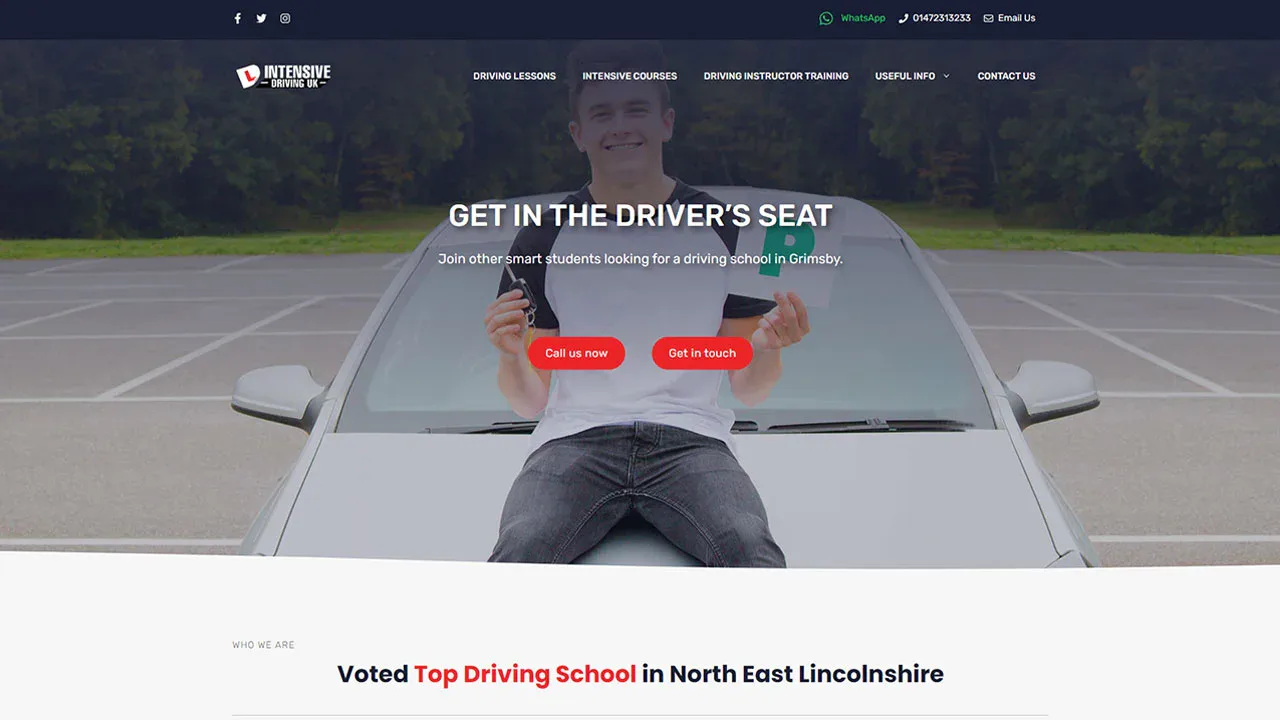
Get in the drivING seat
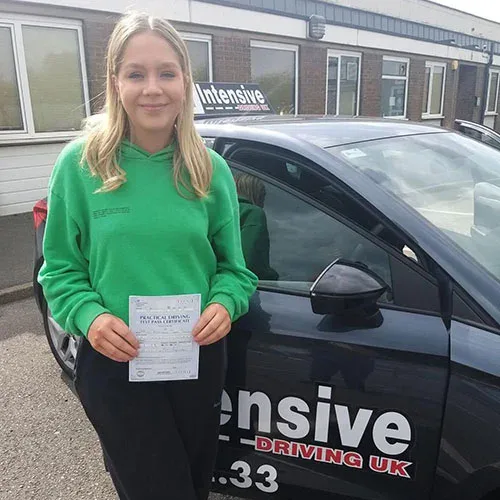
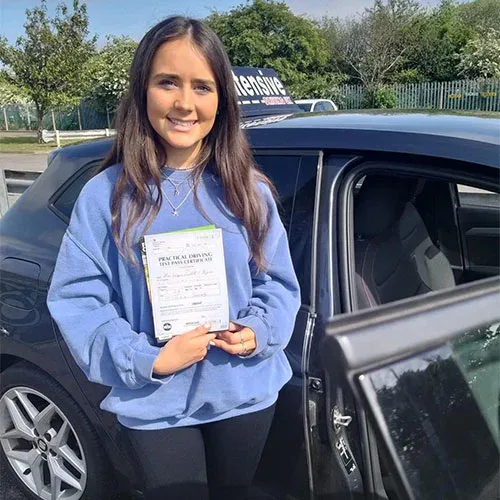
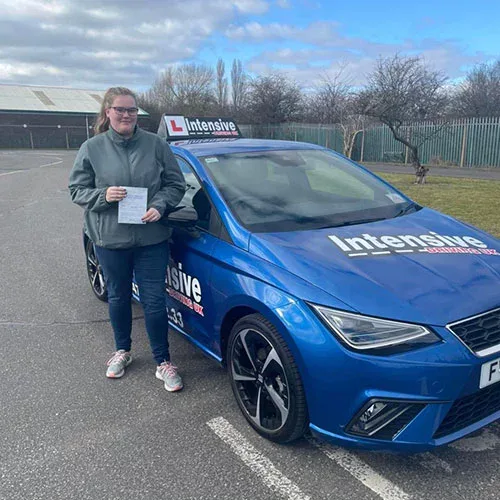
Join other smart students looking for a driving school in Grimsby.
Who we are
Voted Top Driving School in North East Lincolnshire
Welcome to Intensive Driving UK, providing professionally structured, affordable driving lessons in Grimsby, Scunthorpe, Louth, Hull, Lincoln and Brigg. We’re probably the biggest, definitely the best, and easily the longest established multi-car driving school in Grimsby, North East Lincolnshire.
We’ve just been voted Best Driving School in North East Lincolnshire by Three Best Rated. All of their driving schools face a rigorous 50-Point Inspection, which includes local reviews, history, trading standards, ratings, satisfaction, trust, price and their general excellence. As they put it…Only the bee’s knees!
Theory preparation
Parking principles
Manual Lessons
Instructor Training
Automatic Lessons
Intensive Courses
1246
students trained every year
15
Instructors available
1714
miles our students cover every day
High%
success rate on first attempt
Area’s we cover
What are you looking for
Driving Lessons
Our 90 minute lessons are very popular with college students, as they fit in well between college lessons.
Intensive Courses
If you’re in a hurry to pass your driving test? Why not book an Intensive driving course with Intensive Driving UK
Instructor Training
Being the area’s number one training centre, we’ve trained many of the areas local driving instructors.
Learn
Our Intensive Driving Courses
10 Hours
This driving course would be suitable for you if you have recently failed a test, or would just like to brush up on the driving skills you already possess. Maybe you failed recently, but did okay on the test, and just need a few lessons before reaching a safe standard.
20 Hours
This course would be suitable if you’ve had around 20 – 25 hours of previous driving experience with a qualified driving instructor. Maybe you’ve had driving lessons a few years ago but stopped them, and want to recommence your driving tuition.
25 Hours
This course is suitable for you if you have had around 15 – 20 hours of previous driving experience with a qualified instructor. If you can move off well, safely stop, and operate the gears comfortably and approach junctions with confidence.
30 Hours
This course would be suitable if you have had around 10 – 15 hours previous experience with a qualified driving instructor. You’re able to operate the vehicle using the mirror, signal manoeuvre routines. You have a essential steering ability.
35 Hours
This course is suitable for someone who has very little practical driving experience, but has good coordination skills. Maybe you feel comfortable and confident behind the wheel and feel driving is something that will come naturally to you.
40 Hours
This intensive driving course would be suitable for the average learner, who has virtually none, or no experience behind the wheel. If you’re an absolute beginner and you don’t feel confident being behind the wheel just yet, then this package is ideal for you.